
Project-Based Learning. When I work with educators, the idea of PBL can be daunting. With packed schedules, initiatives, and curricular challenges, adding one more thing to your plate seems impossible. Designing a full class project, grading criteria, artifacts, deliverables, and time to celebrate student accomplishments feels daunting, and rightfully so.
But wait. Maybe there is an easier, more streamlined way to make project-based learning an integrated hallmark of your classroom? What if you could streamline what is already in the curriculum into a culture of “micro-PBL”?
What? How? Can this be effective for students if a deep dive does not occur? Let’s take a peek at what this could look like in any classroom.
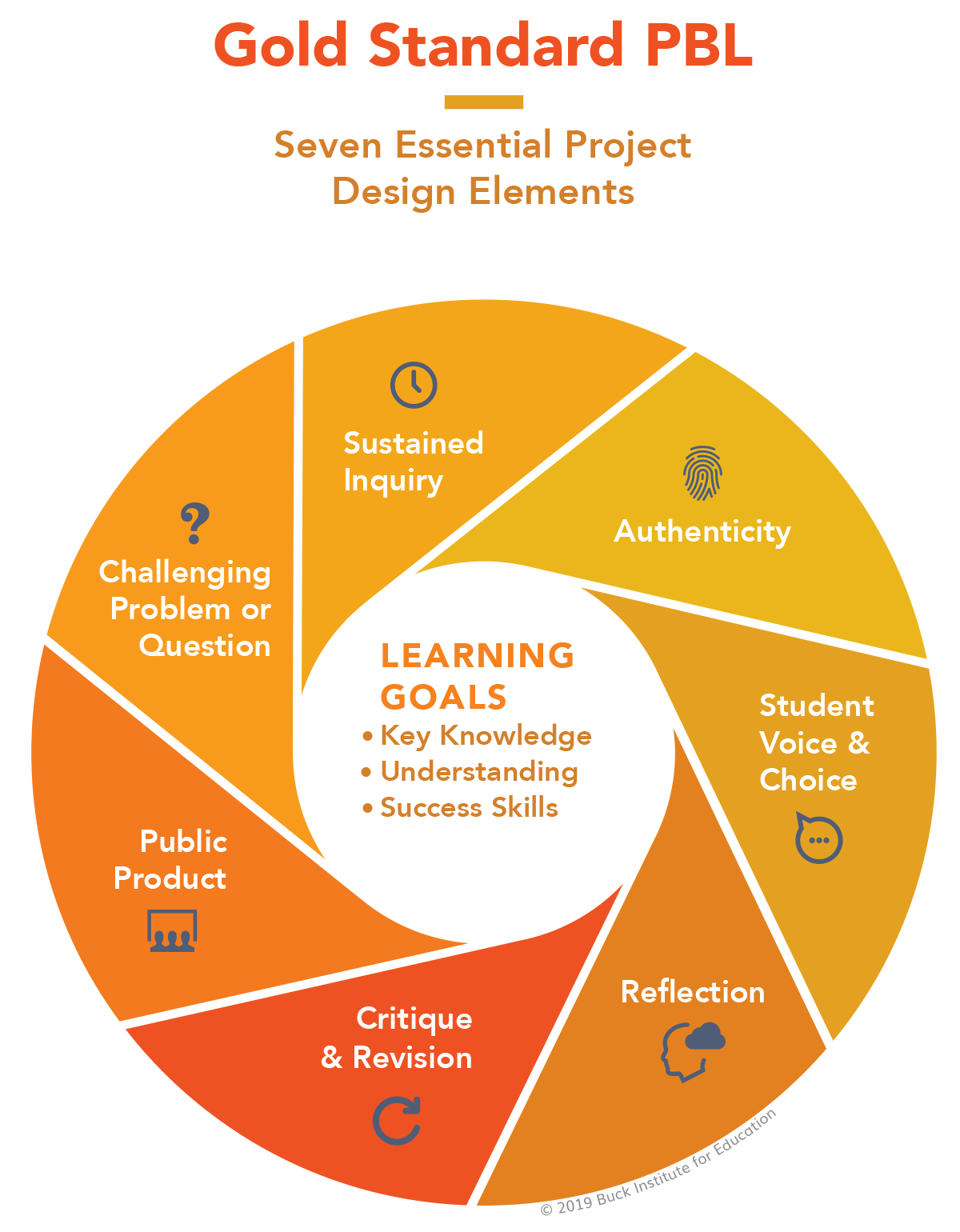
Using the Gold Standard for PBL design, there are a lot of pieces to consider, especially when the goals include items like authenticity, inquiry, student voice and choice, and time for revision and reflection, all culminating in a public product. PHEW! I often forget what duty I have on a given day, so how can I make this happen?
What if we as teachers normalized PBL as planning? Or, what if micro-project-based learning started small within your day-to-day planning and grew as you gained comfort and saw improvements in student engagement?
Let’s start with a brief “Why PBL?” moment.
- Why PBL? (Even on a micro scale)
- PBL improves learning.
- PBL makes school more engaging for students.
- PBL builds transferable skills and executive functioning.
- PBL helps address specific standards and proficiencies in a way that allows for meaningful reflection, peer reflections, and the development of self-understanding.
- PBL provides opportunities for students to create.
- PBL allows educators to work individually with students as they create.
- PBL connects students and schools with communities and the real world. (According to the Edutopia)
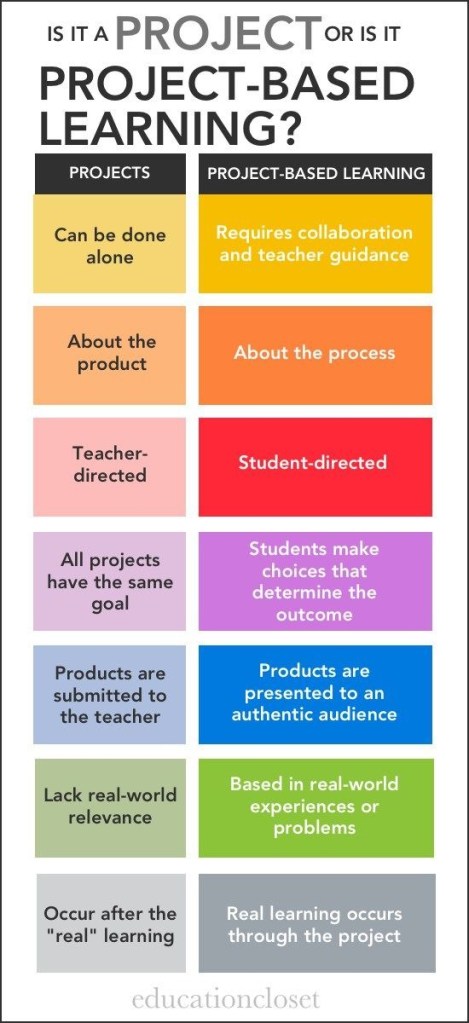
Projects vs. PBL What is the Difference?
Enough hypothesizing—let’s cannonball in, shall we?

During my time working with the Tarrant Institute for Innovative Education at the University of Vermont (Go Cats Go!) I was fortunate enough to spend time with educators and administrators that saw the value in engaging students in a focused and meaningful way through PBL. We were all fortunate enough to have supportive administrators who encouraged the development and implementation of project-based learning across the curriculum. I consider myself lucky to have had the opportunity to see how successful projects were designed and how to best leverage these experiences to the benefit of students.
The takeaway? Truly transformative and meaningful experiences can be designed for students. Conversely, these experiences can become long, drawn-out affairs. My belief is that a balance can be struck.
Let’s start small. What unit are you currently teaching, designing, or considering for your students? Year to year, educators typically hold onto that which worked and seek time to replace or redesign the less-than-successful tasks from the prior year. In the interest of micro-PBL design, choose one concept or area of study that you would like to change. If you desire to redesign anyway, think big! (I am aware that big thinking about micro-PBL seems counterintuitive, but hear me out!)
Here is a quick template to consider for your micro-study. (click and make a copy, if desired.)
This quick format can aid in creating an outline for planning. If you co-teach or are designing as a grade cohort (woo hoo!), these can be shared and edited asynchronously to be revisited during PD sessions.
I find that the biggest hurdles are narrowing down a guiding question and options for artifacts. Once you have a question (or “hook”) for students, let that be your jumping off point. For older students, this can become a moment of negotiation as they ponder the question, generating some driving questions.
Here is a current example that my students are considering.
EX. “The Commons noise during lunch exceeds safe hearing levels. Can the space be redesigned so you can have lunch and protect your hearing?“
Using the question and graphic as the “hook,” students then design “notice/wonder” questions or a “driving question” that they would like to know the answer to.
The limiting factor for any micro-PBL is time. What is the time frame to create an artifact? In the interest of authenticity, inquiry, and maintaining student voice, the product should be aligned to student age, current level of understanding, and timeframe.
Let’s look at some product options for my current micro-PBL. Knowing that students have a solid grounding in sound waves and how they interact, I can set a target for them. The goal is to create a high-leverage artifact that stays focused on a meaningful target.
If I have two class periods, students may take images of the space, annotating to explain how sound interacts with hard surfaces.
They may choose a video that explains why the Commons is so loud, using the contained concepts to draft a testable hypothesis to solve the problem.
Create a short video that tours the space, identifying areas where sound waves are amplified through constructive wave interaction.
Another group may choose an explanatory, problem-solving model that focuses on how to reduce noise through the absorption of sound waves.
Maintaining student voice and choice is critical for the success of any PBL. If this project is just rebadged worksheets or teacher-designed ideas, the learning tends to be flat. Feel free to provide a list of grade- and age-appropriate options to guide their thinking.
Grading! How will you assess their understanding? Since you designed the question, there are three solid ways to assess artifacts.
- Peer Assessment– Provide a short, single-point rubric as part of a gallery walk or mini presentation. Student groups can also request very specific, targeted feedback about a section of their artifact.
- Self-Assessment– Using the same rubric, how do students rate how their artifact design demonstrates their understanding and answer to the guiding question?
- The Big Assessment Swing—what if this artifact was utilized as a formative, not summative, assessment? In my classroom, I find that students take greater risks when posed with an assignment worth zero points. They must show understanding without the fear of failing.
So, what is the teacher’s role? Well, it is to continue teaching, but in small groups. Have a “questions and challenges” table where students go to sit when they are struggling. When they take a seat, you take a seat. wander from group to group, collecting “pass-by” formative assessment notes.” How are students doing? Where are they hitting big obstacles? Where might they need some differentiation?
Differentiation is a key component to micro-PBL successes. Luckily, you can make these happen on a group-by-group basis. Choice board style ideas, video supports, whiteboards to draft ideas, and so on. You are the person with expert knowledge of your students, so differentiation can be fluid. The BEST PART is that you can differentiate without bringing attention to the class that certain students “need extra help.” My students have a strong sense of justice, and perceived favorable treatment is not always helpful for classroom culture.
If time allows, PBL can take on a more macro scale. Based on the success of the artifacts, how can you create interdisciplinary connections? Or, how can students take a deeper dive into their concept, addressing their driving questions with fidelity?
To be fair, educational AI tools can be a great place to begin. MagicSchool AI (no affiliation—I just think that it is one of the best current teacher tools) has a solid PBL planning tool. It does not focus on microscale ideas but will provide a template to start.
The design and integration of micro PBL can be a game changer for students and classrooms. Through a narrow focus and specific learning targets, students can engage with the curriculum in a way that supports their creativity and level of understanding.
For administrators and educators, I offer two- and three-day professional development workshops that guide educators through the PBL process, focusing on integration into the current curriculum.
 Mr. H's Not So Secret Classroom