
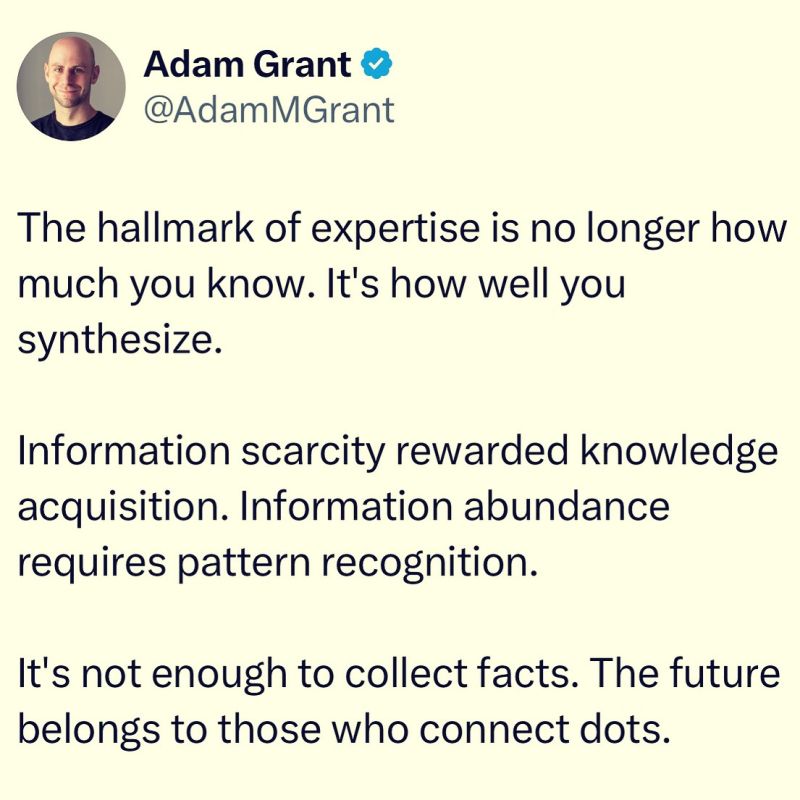
This quote popped up today, and it felt like a good place to start on this cool, Monday morning. Normally, I am not a fan of using quotes, but this one struck just the right chord for inspiration. My last post referred to changing a system in-situ, and reading this little message immediately got me thinking about education, and the student experience. Learning has a “how” that we as educators talk about, but end result often equates that with “what” they are learning. If we provide the content, the belief seems to be that students will find their own interest somewhere along the line, and engage with the content to create synthesis, meaning, and connect the information “dots.”
To do this, I find that educators believe that students will take reading, labs, reflection questions, essays, posters, and the beloved slide show as the gateway to knowledge, understanding, and their version of “the truth.” Now, we can write Learning Targets on the board, introduce them as the goal for the day, but these do not create meaning for students if they cannot find a pathway forward with what they are learning. What is missing? Student motivation? Teachers can’t compete with phones? The lack of belief that education shapes their future? Parental and public support? I would agree that these are all factors, 100 percent. So, what is a pathway forward?
My suggestion is to look to the students. What is there experience? How is it shaped? Have we, as educators, looked at HOW they are learning? This includes looking both inside AND outside the classroom. This is where our relationships with students are critical. What are their interests, passions, and goals for the future? How can we leverage these passions to develop interest? How can this interest lead to understanding? Finally, how does this understanding connect the larger “dots” for all students.

We all love an “aha” moment
The “aha” is what can make the day of a student and educator. We facilitate the connection of dots, and want students to find their way through the material. It would be fantastic for students to desire knowledge, to seek the truth, and to let what they know create meaning in their lives. This is not always the case, ok, rarely the case, so we have to find those inroads that create a spark. Ask, what is the “why” for your own students? In growing relationships, you can begin to aid in the growing of humans. Why does your top student work the way that they do? What drives them to succeed? It may have nothing to do with your subject, rather they see school as a means to a reward. The reward may be college, a technical career, or to their future view of “success.” It is vital that we as educators talk to our students about what they want to do in the future, and we connect those dots as we envision curriculum, classroom experiences, and the development of student thought to connect their own dots.
For example, my students are currently working on the formation of elements in the Universe. It is an abstract concept, and can be pretty overwhelming, because you are working on both micro and macroscopic levels. Elements, by and large, mean very little to students, in my experience. They grasp what they are, sometimes only understanding that they are the building blocks of matter, really small, and make up everything. If that is the locus of your understanding, how much farther are you willing to dig? Think of it like this- if I type the word “mitochondria,” how many of immediately thought “powerhouse of the cell!” After that, it may get fuzzy for you. Why do you remember this? For those of you who remembered more than that, can I ask WHY you remember it? What experience did you have that deepened your understanding. Granted, if you are reading this, you may truly enjoy learning things. For the students who don’t really seek this knowledge, they know just enough to take the assessment. Patterns are not recognized, and connections get missed.
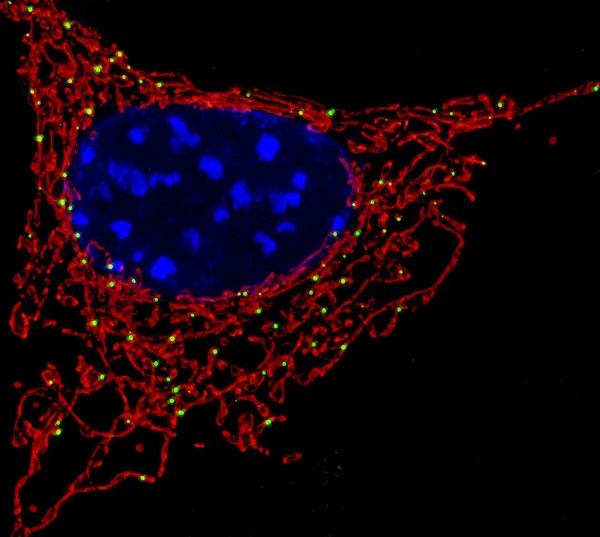
Check out those powerhouses!
How to create connection for students? This is where getting to know who they are as people can change the game. Ex. for athletes, how might exercise promote the growth and development of mitochondria? For my artists, how can they expres understanding of mitochondria shapes and structure in the cell through creative expression and an artists statement?

This watercolor provides an abstract view of mitochondria. How might this be utilized in a classroom?
What if you tossed this question out to students. “How might variations in mitochondrial activity within the brain influence social interactions and behaviors in organisms, including humans?” Did a few students pop into your mind? The framing of these types of questions for students may spark an an area of interest. How about “Mitochondria, the powerhouses of cells, are capable of sensing and sound vibrations. In fact, different types of music can have a positve or negative effect on mitochondrial function and cellular growth. What is the connection?”
These types of questions immediately ask students to go deeper. What do THEY want to know about the topic? It can be as simple as beginning with a “driving questions” board/ Padlet/ Canva/ or poster for students to reference. It is so basic and simple, but puts the students first. I constantly an bombarded at home with questions. As a Dad of six, there are lots of things that they want to know. Often, the questions are not directed at me. Instead Alexa and Siri do much of the heavy lifting. If you have listened to young adults and children postulate questions- my 11 year old asks 11,312 questions a day- you will gain insight into how their minds work. Do they want a statistic? Is the question nonsensical? Are hey asking something that creates a connection? It doesn’t really matter. Engaging in asking questions is a way for them to create meaning. What is the reward for this line of questioning for kids? If anything, all those questions may give them an advantage.
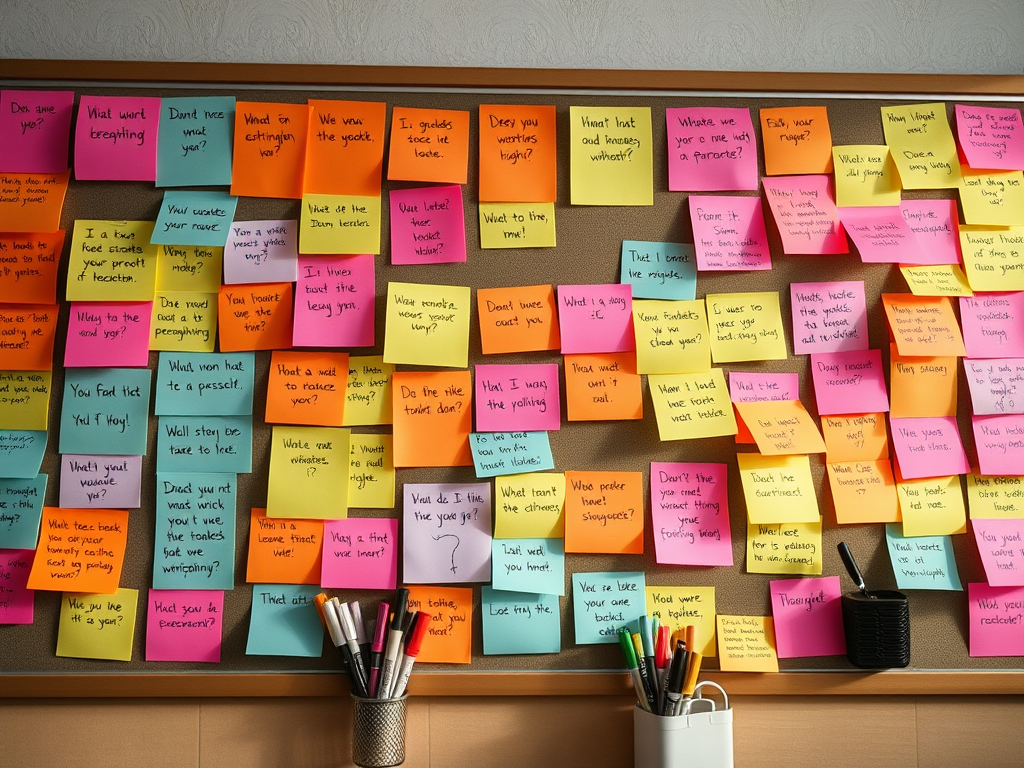
Admittedly, I am awful at designing Pinterest -worthy bulletin boards, but find inspriation and instant student recognition when student questions can be pulled daily and addressed as a part of the curriculum. If we want students to connect the dots, we have to think bigger, casting a wide net to engage students and let the flow of ideas be their ideas. After working with numerous educators around this topic in workshops and through professional development, please allow me to answer some common questions.
- Yes, the content remains the same.
- Yes, you can still lecture, give notes, quizzes, and have activities.
- Yes, this drives student engagement in a way that may require you to facilitate as well as directly instruct.
- Yes, students will engage with the material in different ways, and that can be scary at first.
- Yes, you CAN let the students “drive the bus” for a while.
- Yes, the same Learning Targets, Curricular Goals, and Transferable skills apply. I would push back a bit on this, with the claim that this may lead to a greater development of both transferable skills and executive functioning for students.
- No, this is not starting over, creating a lot of work for already overworked educators. Instead, it is a shift in our thinking and methods. The approach is different, but the base content remains the same. I would encourage you to alter your thinking from “what” students will learn to a flipped “how are students experiencing the content as they learn?” Which of these leads to connecting the dot as learners?
What do you think? I would welcome your thoughts and experiences with students.
 Mr. H's Not So Secret Classroom