
My perspective on teacher feedback
“Mr. H.? I have a question.”
I still wonder how many times I hear my last initial in the middle of class. It is the sound of inquiry- even if that inquiry is to use the restroom or request a Band-Aid. It rings of potential, and I enjoy question 13,567 as much as I do question 1.
As we work through this new question, through the door walk four administrators, clipboards in hand, complete with specialized “walkthrough and observation” sheets. There is that moment of feeling as if they are there because something is wrong. Apparently, I have never lost the sinking feeling that occurs when the principal wanted to see me.
This is such an opportunity! A chance for professional growth! I love student interns because they walk in and question the how, why, and what. Without that, self-reflection is the only means to gain some pushback and questions about my practices. Self-reflection is valuable but falls short of the outside perspective needed to truly examine what is happening on a day-to-day basis within my classroom. What causes me the anxiety is necessary and valuable. Not like dentist anxiety, but clean teeth…..I digress.
This is where pre-walkthrough discussions, transparency, and engagement become, in my opinion, vital for productive feedback. This feedback is vital for any educator seeking to grow their practice. It is also an opportunity to create transparency around classroom culture, student agency, and student-teacher interactions.
For educators reading this, you understand the feeling. Nervous and excited energy bleeding into the hope that your students step up and really show their stuff. Answer questions, ask questions, and show your pride in yourself and your classroom. Maybe they will, maybe not. All educators should embrace when someone visits when the class has jumped the rails. Be ok with bombing once in a while with people there. When comedians are testing new material, it can be ugly. This ugly is how you grow and improve! I went to see a comedian last week who was dropping some real bombs on the audience. Instead of being upset, he calmly stopped, shrugged, and explained “Hey, this is how the sausage gets made.”
If you are an administrator, coach, specialist, or another official visitor, your task is difficult. There are specifics you are looking for, strategies you hope to see, and student engagement to assess. I cannot speak for all educators, but after a quarter century, I have distilled what I would like to see in an observation/ pop-in/ walkthrough. If the goal is to engender cooperative trust, gather information for feedback that supports growth, and have the opportunity to have a trusting, productive dialogue, I respectfully ask that you…

If there is an observation or walkthrough planned (I love the term “Learning Walks” because it feels as if the term connotates reciprocal learning.) Please consider how to facilitate the following:
Don’t worry. The list is pretty painless.
Keep in mind that this is my opinion, but I will hedge my bet on this one. If you want to have the most productive visit, please follow these seven steps.
- Let me know! I love a good pop-in as much as the next person, but the heads up gives me the opportunity to let you know what we are working on, what to look for, and even a chance to ask you to keep an eye out for something specific (ex. a management strategy I am piloting, a specific student’s behavior, etc.)
2. Clarity of purpose. Have a checklist! Let me see the form! The Learning Walk form is vital, as it delineates what you are hoping to see during your time. If you stand in the back (I’ll get to that in a minute) with a clipboard, I know what you are checking off, what your goals are, and the data being collected. This data opens the door to a follow-up that is transparent and focused, allowing for growth for both parties.
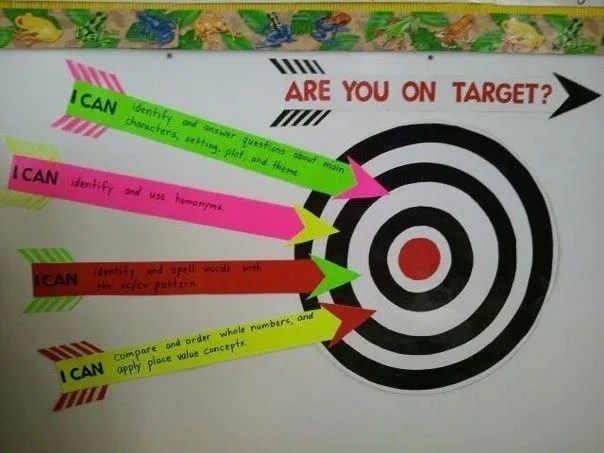
3. Objectives. In a student-centered classroom, not only are the Learning Targets and Tasks clearly visible in at least one place, they are referenced throughout the class period. This serves to keep both students, and the teacher, on target. (I am prone to tangents, stories, and “human moments.”) It is good to acknowledge that they exist, but ask the students if they know what the Learning Targets are. If possible, inquire about the application of these Targets. How do THEY apply the Targets to their own learning? Targets are for the students! I can write them everywhere, but student understanding gives them meaning and purpose. I realize that not all lessons allow for student and visitor interaction, but I promise that it will change your view of how students are engaging with their learning.
This leads us to number four:
4. Time? How long is the walkthrough? Let’s think of this differently…. How long does it take to orient yourself when beginning a PD, Faculty Meeting, or Conference/ Workshop? Probably not five minutes, or ten. You do not have to stay for the duration but linger a bit, ask questions, and look at the shared materials, so you can gain clarity around what the student experience will be during that class. It takes me time to figure out what the workshop is about, what is expected of me, and what I can expect to learn. Personally, this is much longer than five minutes.
What are the benefits of these few extra minutes?
5. Student Engagement. Those few extra minutes allow observers to become inquirers, facilitators, and participants in student learning. I push my students to be fearless risk takers and this message rings hollow when we are not modeling this behavior. I spend a lot of time making purposeful mistakes, challenging thinking, and encouraging productive struggle. Growth over achievement, after all. Keeping in mind that the kiddos are always watching, taking cues, and shaping their view of what it means to be a part of their school. They engage as we engage. Standing in the back of the room, attempting to be an observational “ghost” detracts from engagement. They do not see you as an integral, positive, and engaged member of the school community. Rather, you are the people to be concerned about when they are in the room. Maybe you are there to watch them, hoping to catch them doing the wrong thing? Perhaps you are another layer of support, praise, and positive questions that they will see in the hallway between classes? School culture is created in small increments, every day.
6. Classroom Culture – Look for how the class runs. What routines or strategies are visible to engage students, increase agency, or differentiate to better meet student needs? Did you witness restorative, student-centered interactions? This becomes less about IF they are engaged, and more about WHY students are engaging in their learning? Is there a box on the form that is a “vibe check” for the space? Happy kids learn. If I neglect certain aspects of classroom culture, I can’t make it all up immediately because I have a visitor. Back to the dentist analogy- I can’t cover years of dental neglect the morning of my visit. No amount of water pick, floss, or White-Out can save me once I’m in the chair. This same principle applies in the classroom. That culture of learning speaks volumes.
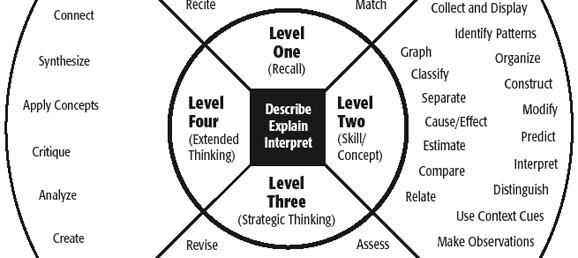
7. Depth of Knowledge (Webb’s DOK) My colleagues and I have spent an inordinate amount of time discussing whether or not to advocate for this assessment in a walkthrough. What we can agree on is that there is a place for all levels found in the DOK Chart. The request for this final piece of the puzzle is simple. What level is appropriate for the lesson? For example, I want someone to push in and ask why the lab analysis focuses only on the recall of the vocabulary terms! But, if we are introducing a unit of study, parsing out important vocabulary, and driving questions, then the lesson may live in Level One- which is just fine for that day.
Webbs DOK
It would be disingenuous of me to not include timely feedback. A post-it note, email, quick conversation, or even a text with some questions is so much better than making an appointment for two weeks from now. It can be direct and to the point, beginning a dialogue that can be built upon that shows trust in the educator, the seriousness of purpose, and care for students. Through these steps, we all grow as professionals, with the ultimate goal of improving education for our students.
Walkthroughs, class visits, and observations are critical for every classroom. How we approach them, what happens during, and the resulting feedback make them a school asset or liability. Ultimately, we must think about how these interactions improve the student experience.
 Mr. H's Not So Secret Classroom