
The email arrived with the usual “ping!” It contained a Google form link about wants and hopes for changes to our school schedule. The scheduling committee was going to meet to investigate ideas around flexible scheduling at the middle and high school level. As a teacher, what do I feel is working, what could be changed, and what hopes do I have for future iterations. Champion idea, old sport! Let me share my vision for the school day.
I’m five questions in, expounding upon what is currently working for students, what is not working for students, and then the proverbial ton of bricks drops on my head….why are we not asking the students? Where is there voice in this process? To any educator, or parent, the answers are already in the front of your mind. Ask a middle schooler what to change about school, what they like and dislike, and the you will get flip responses, right? “No Homework!” “Start at 10, get out at 1:00!” “No Tests!” “No class with (insert teacher name here)!” With answers like these, why ask, right?
My ELA partner in crime, Sean Hirten and I made the executive decision to challenge those answers. If students could start over, what would they like to see? How could their voices be heard? Could the ACTUALLY create meaningful change within their school experience, while learning about the pitfalls and challenges along the way?

So began our PBL story of “Re Imagining School.” If anyone besides my Mom read the previous post about the origins of this project, (Thanks for the hit, Mom!) here is how this all played out, who will see their work, and how students started silly, and ended up with powerful thoughts and ideas about their education.
The first challenge Sean and I faced was how to structure the project to be open ended, but guiding. We find that too many models, benchmark pieces, and examples leads to students creating carbon copies of what they think we want to see as their teachers. So, following the student centered, playlist model used in my science classes, we sought to blend open ended inquiry that still gave opportunities for group and individual ideas to develop. The pathway was designed, and we stepped away from leading, and into a guiding role for each group.
First task, creating the backstage scaffolding that would be the backbone of the project. As with any PBL/ UDL, the focus was on the end product, the student experience, and diffentiation of tasks. Walking the tightrope of developing a lesson that is so guided that it becomes our project, not the students project, can be precarious. We chose to hone in on providing exposure to different thought processes around education. Charter schools, Private schools, Montessori models, The Walden Project and High Tech High (editorial note Sean and I have both visited High Tech High.)
We were both taken with the student/ teacher dynamic and the Social Justice Humanitas Academy. Giving student voice to the roles between students and teachers is vital to a positive school climate.
So began the playlist for each group. We established frameworks for group reading, watching, and researching different schools and educational philosophies. Group norms, scholar responsibility lists were designed to provide agency , student control, and tracking of progress for teachers throughout the journey.
Sean and I determined the groups of scholars that were to work together. The impetus for these choices was to create heterogeneous groups that would bring unique perspectives to the study. As we explained to students, not everyone has the same school day, the same school experience. If education was to work towards equity and education for all learners, having only like minded students working together truncates the valuable discussions that are necessary for this project to be successful. Thus began group research into education methodologies that sparked interest in each student.
From the research came student concept maps.
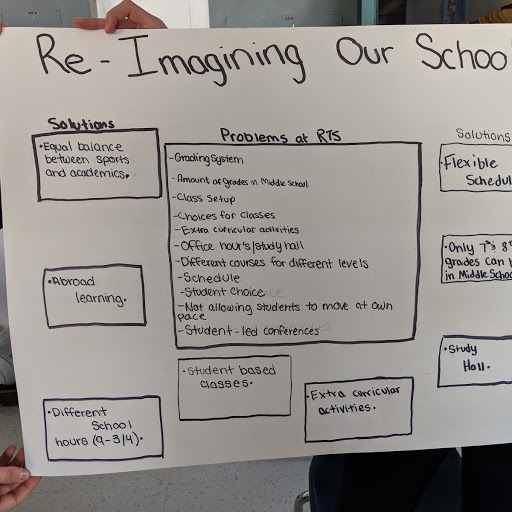
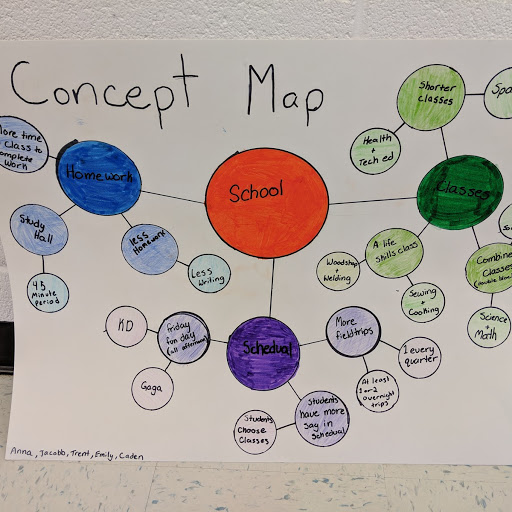
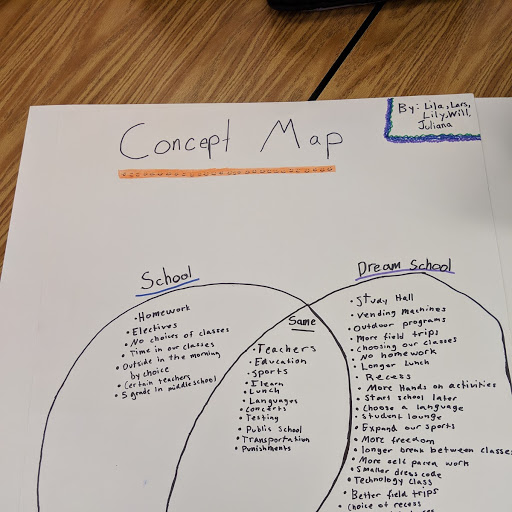
Another wrinkle that was added to the project was instituting an A/B schedule for the eighth grade. ELA/ Science time was flip flopped each day. So, not only were our scholars heterogeneously grouped between classes, thus shaking up the partner options, but they also received a daily shift in scheduling. With a new daily schedule as part of the project requirements, and the district scheduling committee viewing student ideas, having a little experience within a new schedule was valuable in shaping the path forward.
The next question that we fielded daily was “Who is going to see our work?” and “Why this project? Especially if no one sees it?”

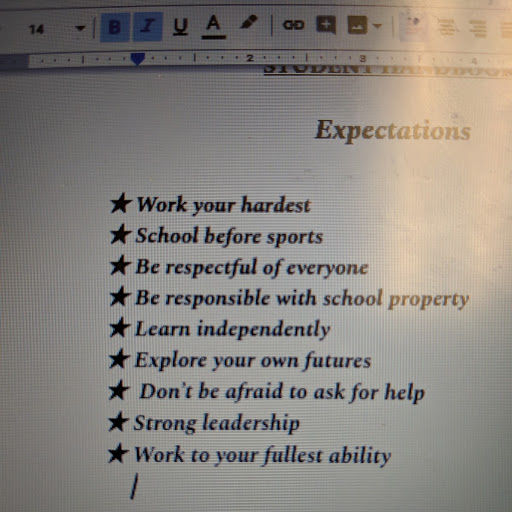
To extend this project beyond the walls of our classrooms, we felt that student voice had to be heard. Therefore, when students asked “Who is going to see this?” and “Why does it matter that we create all this?” Sean and I were able to let groups know that their work would be considered by:
The GRCSU Director of Student Services
GRCSU Superintendent
GRCSU School/ Flexible Scheduling Committee
Rutland Town School Scheduling Committee
Rutland Town School Faculty
Schools are businesses, and it is vital for us to understand our clients. Providing students with an authentic voice, that has the possibility to create real and positive change within their school (following them to high school, in the case of the eighth graders,) gives this project legs. Sean and I are excited to see the next phase for student work!
Update: Sean and I just received word that our students will be presenting this project at the Dynamic Landscapes Conference in May at Champlain College! Sign up for a great conference, and take some time to listen firsthand to students experiences!
 Mr. H's Not So Secret Classroom