
Why do I need to know this? When will I ever need this? The most commonly heard question of bored, disenfranchised, and checked out students. I can’t compete with Fortnite (although I can dance, but I digress,) and I often have to think that they truly won’t need to know everything I ask them to learn. I can recall small parts of my past education, but the specifics evade me. The information most readily available to my often Swiss cheese-like brain deals with connections to real life. Scenarios, opportunities, and actions of all those “grown ups” that I was going to join the ranks of, eventually. With my own experiences as a starting point, I attempt to ground my students studies in real life as much as possible. Learning must go beyond the assessment, and provide some value. We all desire value, right?
When my former colleague and friend, Justin, followed his own dream of a PhD. in Montana, I knew that he would involve himself in some fantastic field research. His own wanderlust would take him from the lab to the back country, and students should be made aware of what science outside of my classroom might look like. The opportunity to remind students that what happens in middle or high school science is just the very beginning of the greater whole. No expert was not a beginner at one point in time. (Read: the cool stuff is out there, I promise. Just get the basics down so you can level up to the awesome!)

So, our connection with the BECCS/ WaferX Project begins. Through our studies of the atmosphere, carbon and nitrogen cycles, urban heat islands, changing climates, and anthropogenic influences in our planet (UN Sustainable Goals embedded,) our classes will get the chance to look at some cutting edge research, fieldwork data, and see the pursuit of answers to questions that have much larger ramifications than a one time lab. A friend of mine constantly reminds me that “We are trying to give (teach) students “the world,” but wall off classrooms, miss interdisciplinary connections, and truncate our investigations in the interest of moving forward.
Enter BECCS and WaferX.

Bioenergy with Carbon Capture and Storage (BECCS) is a form of climate change mitigation that removes carbon dioxide from the atmosphere while also producing energy.
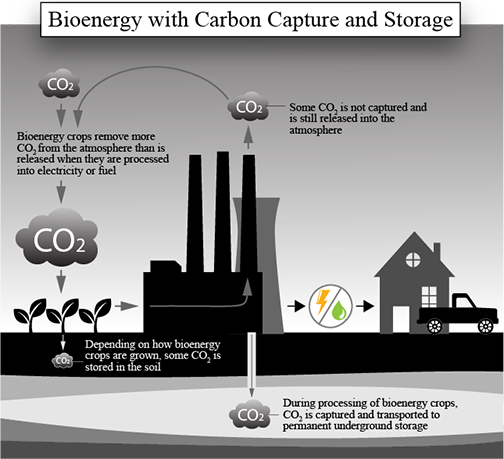
The most important part of this real life connection, in my opinion, is the opportunity to connect directly with the scientists that are a part of this project. Asking probing questions, following up with new questions, and synthesizing their own studies with “the world” is an experience that I hope to have for all of my students. On top of all the science connections, we have some transferable skills to develop, and numerous interdisciplinary connections that can make “the world” all the more real for students.
As students begin, follow ups will be posted.
The truth, and those who are seeking truth, are out there. Imagine the connections that can be made for students?
 Mr. H's Not So Secret Classroom