
“It is no longer acceptable to quietly fail.”
“Dumb”
“Unseen”
“Teaching is about changing paradigms.”
As we plow through our day, it is easy to forget that we, as educators, can’t force anyone to learn. With the exception of “Good Morning,” the first statements that I make to new classes are that:
- They are in charge of their own learning. I can’t force them to truly learn anything.
- That each one of them will never be alone. We (the two of us,) are in this together.
The student that has failed themselves, and has been allowed to fail themselves, over and over again, needs an advocate. That advocate has to draw a line in the concrete. A line that unequivocally states that they count, and they matter. There is no more “trying,” because trying is justification for failing. “But, I tried!” is no longer acceptable within this realm. (Well aware that there is a perfectly acceptable Yoda quote for this, but it has been overused.)
To me, the heart of Student-Centered Learning is an examination of how we go about our daily business. Educators new to proficiency based, student centered learning often view the shift as the nuclear option. Blow up the curriculum and start over. To that, I say no way!” As a business, we can begin to recognize that understanding our customers means a shift in our thinking, and retrofitting to be the best versions of ourselves FOR our students. Educators have designed some incredible curriculum, only to have it fall short because students are made to feel dumb, or lost. There can be a fundamental disconnect that happens in a one size fits all ideal. Beyond lessons, labs, and assessments, our largest job is to create an environment where students understand the expectation for success. In my opinion, students fall short because the culture of success is not developed. The expectation that all students can, and WILL, succeed is not clearly expressed.
I am absolutely guilty of believing that this culture will create itself. If I model this culture, hold high standards, and build as rich and engaging a curriculum as I can, students will join in and embrace this culture. This has belly flopped numerous times, usually by winter break, and I have been left scrambling to triage.
During the process of unthinking, unlearning, and relearning how I approach teaching and learning, the theme that kept emerging was how a focus on student growth could create an opportunity to develop the whole person. In short, encouraging students to be active participants in being the best versions of themselves.
You can call it what you like. Being resilient, believing in yourself, being confident, the all purpose and overused “grit,” all can be used to describe our goals for students. Leaving our care as self directed, motivated, learned individuals is a goal drilled into educators. (I warn my kids that the expectation is to not enter into the world as someone that is just “in the way.”)
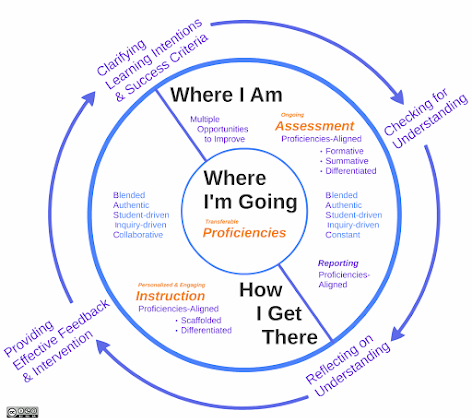
The curricular playlists that we use (past post) in science definitely put lessons and pace into the hands of students. In providing student voice and choice, I become the student advocate, instead of the adversary. With that said, I am fully aware that my classroom is always evolving (I would argue that curricular Natural Selection is a thing.) and that the focus would be on the development of school culture, student responsibility, and attitude towards their own learning and achievement. I take a lot of motivation from the models put forth by the Social Justice Humanities Academy, High Tech High, and the educators that create cultures of learning where student growth and connection are paramount to success. I am grateful for your efforts to put students first. Thank you for all you do!
 Mr. H's Not So Secret Classroom