

“You are about to witness the strength of student creativity”
The panda image above is obviously a word cloud. It is like thousands of other word art clouds designed by students every day. The one distinction that separates this cloud is that it is a student designed, “A-Ha” moment cloud that targets a specific transferable skill set that can be identified (inside or outside of school,) applied for, and awarded a digital badge as part of their Personalized Learning Plan. It adorns the classroom wall, along with four other just like it, altering our classroom focus from academic growth to individual skill development.
Hold up- let me start again.
OK. The impetus for this entire project began, shockingly enough, sitting and talking with kids. (I know, right?) I am still amazed up what they come up with when they are asked their opinion and asked for suggestions. Attending the 2018 Middle Grades Institute, I had the crazy idea to sit down with a student focus group and just pitch an idea. It was a total educational Shark Tank moment-they buy into what I am selling, or they don’t.
My only idea going in was to design a program that made students aware of the transferable skills that they were gaining on a daily basis. Too often, school is compartmentalized, literally walled off, by subject matter. “Outside school” is completely different than “inside school.” The development of skills necessary to be successful happens all day, every day for students. It was this disconnect that I wanted to focus on. How to allow students to see that they are positively contributing to themselves as learners on a daily basis. In the larger context, to have a way to track and celebrate skill development as much as the traditional academic successes. Through that recognition, students can then utilize this sense of self to gain greater ownership and understanding of their Personalized Learning Plans. Four days to meet with students and hammer this out- easy breezy.
The first meeting with students was eye opening, to say the least. I started by simply asking them what they liked to do outside of school. The answers were as you would expect- sports, video games, sleep, dance, theater, music, sleeping, jobs, food, babysitting, etc. The conversation them became what skills they need to be successful at their activities. The theme of responsibility, creativity, problem solving, critical thinking, and leadership were most prevalent in their examples. The answers to the next question was fascinating.
“Are the skills that you use in your out of school activities the same ones that you use in school?”
“No, those are different. School is school, and (we) just do what we are asked to do. Being, like, a leader in a group project is not the same as when we play sports or are in a play or something like that.”
The sobering theme was that students had created a disconnect between their lives outside of school. Beyond that, I discovered that many of them saw skills such as critical thinking relegated to science projects, and leadership only when they took a head role in a group project. They saw themselves differently outside of school.
In my classroom, we track proficiencies, Habits of Work, and claim to assess transferable skills. They are mentioned as part of assignments, written on whiteboards, and have a place in grading programs, but I had yet to see anyone specifically identify these skills, how and where they are developed, and address why these skills are important. Arguably, a student may never have to remember the formula for the Law of Universal Gravitation, but will utilize all of the skills developed while working with their friend to create a model that demonstrates how the variables can be manipulated. Or, how the leadership they show on the soccer pitch can also be shown in the classroom.
As the conversation continued, the plan for our Digital Badging system started to take shape. The students jumped at the idea of designing a way to show that they had developed, and demonstrated, certain transferable skills. The idea of earn, “leveling up,” and eventually being able to issue badges was borne from student discussion and critical thinking about how they envisioned a program that focused on skills.
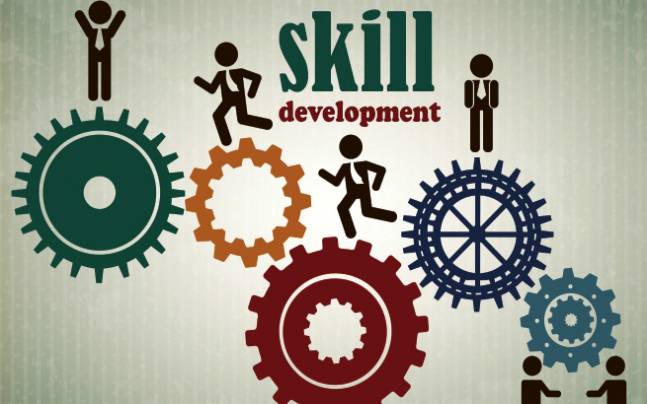
The next step was to identify what skills they valued. Seems to be a simple enough task, until we began looking at the Vermont Department of Education Transferable Skills list. The students reading the list understood the basics, but felt that there were too many, and that some could be combined. OK- I can be flexible. Through a little more investigation, we discovered that there were not many badging programs out their that focused on skills. The best comparison program that we could find was in Aurora, Colorado. In assessing both sets of identified skills, we decided to combine the skills into a custom set that made more sense to them.
Looking at the transferable skills in the link above, you will notice that the badges are colorful, and include a number of images. Here is the story behind them:
We initially had to find badge criteria:

Initially, I wanted to design simple, classic badges for student use. When I shared this with them, I realized my grave mistake right away. I was not at all creative enough.
Enter Canva. This is probably the most intuitive graphic making program on the market. My student focus group (including my son, Morgan- which was such a trip) essentially told me to step back and let them work. About an hour of intense focus and sharing of ideas later, I was shown badges that look more like this.
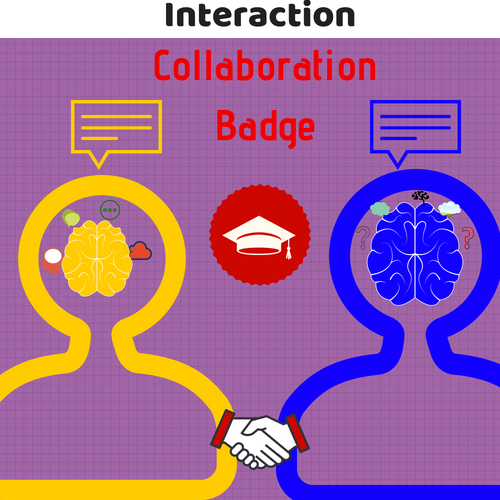

Looking at my sad attempt at badge design, I was not proud of me, either. What I did get was a chance to learn a new program for infographics, so it was a win!
With badges in hand (or Drive,) I was ready to tackle the application, distribution, and designing a way to turn badge consumers into badge issuers. Some early questions:
What is the grain size for a project like this?
How many students should begin to earn badges?
What does this look like, in terms of the school day. How can we fit this into classes?
How can students “level up?”
Here we go…..
 Mr. H's Not So Secret Classroom