
“Your scientists were so preoccupied with whether they could, they didn’t stop to think if they should. – Dr. Ian Malcolm (Jurassic Park)
Change “scientist” to “teachers” and this quote is apt for all of the changes that are happening in education. The rush to personalize learning, making it student centered, student driven, less sage-on-the-stage,- we are trying it all. Standards! No standards! PLP, ELO PDP, PIP, SBL, PBL, EIEIO, give it a name, and we will create an acronym for it. Don’t get me wrong, we have the children’s best interest at heart. All those acronyms mean form some is more work. On top of what we are doing now, reinvent to make your classroom exciting, engaging, and relevant for today’s learners.
Simple, right?
The attached article brought a new perspective to my student-centered classroom vision. We are a one to one Chromebook school. Kids love technology, and are always connected, so let’s start there. Pitch it where they can hit it – on a screen. My initial student centered design was too focused on screen time, shared work, and online collaboration. It was not until I stepped back to reflect on what had been prepared that I realized what was being ignored.
Instantly, I am competing with the YouTube rabbit hole, online games (that kids can find, no matter how many ways they are blocked by the IT people,) memes, gifs, basketball highlights, and every other thing that are NOT part of my classroom expectations. The rush to personalize meant directly aligning curriculum, creating multiple pathways and opportunities for students to experience and learn. Who would shy away from a 360-degree view from the top of Mt. Everest? Unfortunately, this “plug in” mentality can be its own pitfall. Students enter your class, plug into a crafted, personalized, and differentiated curriculum, only to lose one of the most important pieces of the school puzzle- people.
Disclaimer- I will always default to children going outside, experiencing life, moving, and discovering. The book “Last Child in the Woods”was as much of a reality check as The Monkey Wrench Gang” when I was 13. Outside. Always. Wanderlust as a rule of life. So, time away from screens is the rule, not the exception.
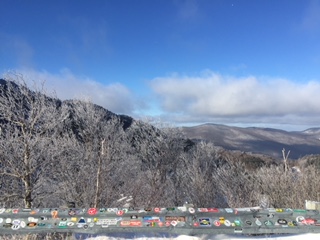
Appalachian Gap. I may or not have added to the sticker collection….
So, in designing a student-centered classroom (at least, my vision,) I was afraid of many of the pieces mentioned in the article. The greatest of these is described in the following,
“While tech-based platforms tailor content, they can paradoxically detach students from the personal relationships with teachers and peers that are critical to learning. ”
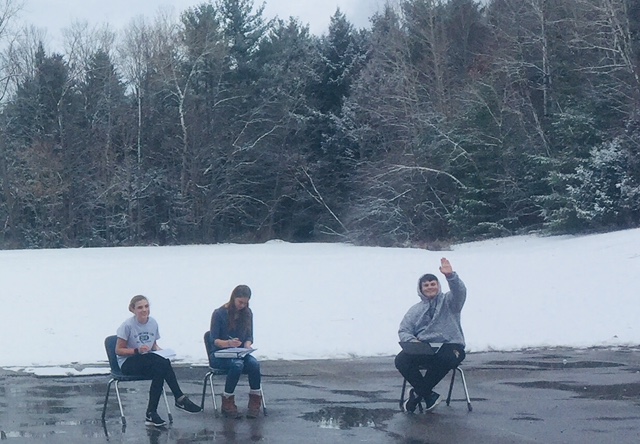
I am not opposed to tech-based platforms, but feel that any program must take into account that no child should be left inside. We now offer celebrations of outside. Does that sound odd? Now is when I begin some anecdote with ” When I was little… but I’ll spare you the dirty, outdoor details.
Now, student-centered outdoor programs exist. I have seen the inner workings and results of The Walden Project, and they are overall positive. I am currently working on a Wilderness Project that follows in the interdisciplinary footsteps of the Wilderness Semester at Green Mountain Union High School. Admittedly, I am fortunate to have access to a pretty outstanding outdoor area right here on campus. So, one way to personalize for students is to focus away from screens.
But, not everyone is as fortunate, and are relegated to classroom, and online, programs. They can be effective, scaffolded, gamified, and engaging. The missing piece is still the human element. The face to face interactions that allow students to feel as if they have a personal connection with someone else. Too many students feel disenfranchised, lost, stuck in a world that is impersonal and devoid of connection. Instantly, that should make any educator, parent, friend, family member, really anyone stand up and take notice. It falls on all of us to provide that sense of connection for students. If not? All of what we try to do will be lost on a student that is not in a headspace that allows them to learn.
So, maintaining connection is paramount, especially for students that are developing so rapidly physically, socially, and emotionally. Addressing this challenge required me to look at how often I was asking them to “plug in.” Designing Performance Tasks that ask them to collaborate, go outside briefly, step away from screens to create and demonstrate, model, explain, and meet. That face to face time is just as important as the concepts they are addressing.
Current 7th Grade Performance Task List:
PT. 1g. Create example/ demonstration for conduction, convection, and radiation
PT. 2g. Lab- Heat storage and conduction
Take Formative Assessment
PT. 3g. Urban Heat Island Analysis (exceeds) – Use this graph
OR
PT. 3g. Urban Heat Island (meets)
Take Formative Assessment
PT. 4g Design an “urban heat island proof “ plan
Schedule Urban Heat Island Plan- Teacher Conference
PT. 5g. Complete Transferable Skills Badge Application
Resource Hint: Albedo Lab/ Albedo mapping in Ca.
As students are working through these tasks, they spend time conferencing, building and designing, collaborating, and communicating their findings. There is screen time. This screen time is a valuable resource (ex. Albedo Mapping,) but proficiencies will be met because students apply transferable skills, which must include the human component. As students are working through these tasks, they spend time conferencing, building and designing, collaborating with peers, and communicating their findings. There is screen time. This screen time is a valuable resource (ex. Albedo Mapping,) but proficiencies will be met because students apply transferable skills, which must include the human component. This skill, in my opinion, is as valuable as any other skill. It must be a focus of any classroom, and designed into the curriculum.
 Mr. H's Not So Secret Classroom